

bookmarks #3
what I've been reading, watching, and listening to lately.

Hello! I have some bookmarks to share with you. There are a surprising number of items about war and the opioid crisis below - hopefully that is not a bad omen for the new year. Here are some things I enjoyed recently that I think you will too:
What I’ve been reading
Demon Copperhead by Barbara Kingsolver
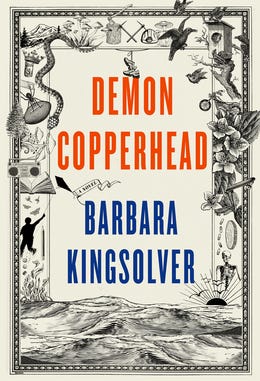
I flew through this book and it reminded me how much I can enjoy reading. This is Barbara Kingsolver’s take on David Copperfield, but set in 1990s/2000s Appalachia. The main character, nicknamed Demon, is a child growing up in poverty during the burgeoning opioid crisis. It is definitely bleak at times, but Demon’s sense of humor keeps the story from devolving into trauma porn. The massive cast of characters around him are drawn so carefully and thoughtfully as well; each of them could easily have their own dedicated book. Demon Copperhead won the Pulitzer Prize for Fiction in 2023 and the tone and voice throughout is perfect. If that doesn’t convince you to read it, here are some quotes I liked:
“He’d get in these sloppy moods of giving me life advice… He always ended up saying the same thing: If you spend one penny less than you earn every month, you’ll be happy. But spend a penny more than you earn, you’re done for. He’d look at me with those dark, sad eyes and lay this on me. That the secret of happiness basically is two cents.”
“‘Here’s what I do know,’ [Mr. Armstrong] said. ‘You are resilient.’
I’d heard quite a few fifty-dollar words for the problem of Demon. I asked Mr. Armstrong if he was wanting to put me on meds for that.”
“The wonder is that you could start life with nothing, end with nothing, and lose so much in between.”
I Invented the Dyson Cordless Stick Vacuum (an interview with Sir James Dyson)
Maybe I am an easy mark for brand-building propaganda, but I really enjoyed this (brief) interview with the founder of Dyson. I thought James Dyson’s path to becoming an engineer was fascinating. His approach to invention also resonated with me and how to approach creativity more broadly. Separately, I love my Dyson vacuum, so maybe I’m predisposed to enjoy this. I would easily read a longer article/profile about him. Here are some quotes from Dyson I enjoyed:
“New ways of doing things often occur when something goes wrong, and you get annoyed. Getting angry is actually quite a good way to start.”
“In a way, because I was naïve, I was prepared to try anything, even if it was obtuse, and it looked as though it would fail. And that’s quite an interesting practice that we follow to this day. You often start with the wrong thing, which any expert will tell you is sure to fail. But because experts never try it, they miss out on the opportunity to learn about something much more interesting: Why doesn’t it work?”
If You Quit Social Media, Will You Read More Books? by Jay Caspian Kang
This was a really fascinating exploration of the “doomsday scenario” where “an internet-addicted public, hooked on the dopamine hits of engagement and the immediate satisfaction of short-form video, loses its ability to read books and gets stupider and more reactionary as a result.”
Kang reconsiders how we think about literacy and how we define it, in a time when we have access to more information (and written works) than ever. I wish the article went a bit deeper on the topic, but it helped put language to some feelings I’ve had about these ideas - whether social media makes us stupider, and the merits that traditional books can bring that the internet (and social media specifically) cannot.
What I’ve been watching
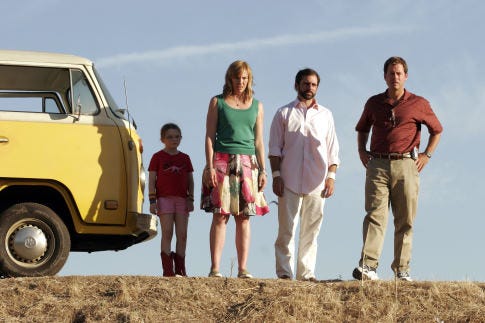
I watched this on the back of a plane seat, which I’m sure is what the filmmakers would have wanted. The last time I saw this movie was as a child, so I forgot most of the movie (including Steve Carell’s character’s suicide attempt, which is a pretty big thing to forget - it happens in the first ten minutes, so that’s not a spoiler). The cast is stacked (Paul Dano1, Steve Carrell, and Toni Collette among them) and I loved every second. I’ve never been more invested in a seven year old competing in a beauty pageant.
“Jap2 Language Useful Phrases” USMC Marine Corps WWII Training Film
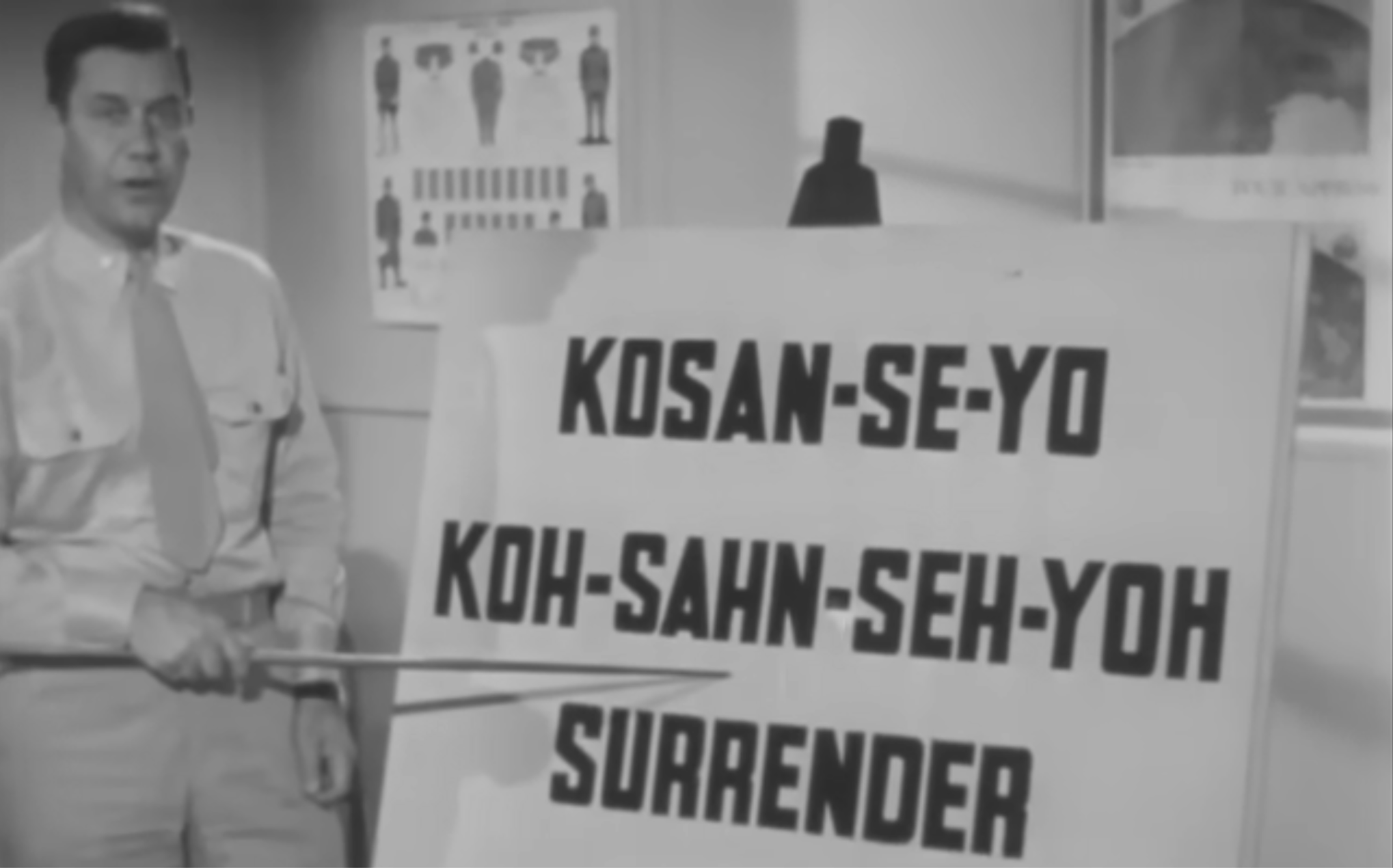
In this WWII-era video from the US Marine Corps, you learn how to say phrases like “surrender”, “drop your weapons”, and “we won’t murder you” in Japanese. In just ten minutes, you can learn some key terms for capturing Axis POWs. The video is complete with call and response portions, so you too can practice your new Japanese words. At one point, the instructor tells us: “Get these Japanese words down pat. It takes time, it takes trouble, but it also takes prisoners.” He closes the video with, “Remember: words, too, are weapons”.
Sometimes I will watch old videos like this from the 20th century, out of curiosity and to better understand what culture was like back then. Sometimes these videos draw uncomfortable parallels to what life is like today. I find this sort of thing so fascinating, and feel weirdly grateful that some history freaks in the ether are cataloguing and publishing these for easy viewing.
I’m Politely Begging You to Write Nonfiction
I loved this video. I’m not the exact target audience - I already write creative nonfiction and don’t need much convincing to continue doing so - but this video reminded me why I enjoy reading and writing it. It also reminded me of several virtues of nonfiction that I sometimes underestimate or forget. Some bits of knowledge from the video that I particularly enjoyed:
“In the broadest strokes, where fiction tells us stories and poetry shares lyrical experiences, nonfiction puts us in contact with a human being trying to make sense of the world we’re in and the lives we live. The heart of the essay is not in the plot or the imagery, but in the attempt to think through something, and that yields some spectacular literature.”
“If you have a hard time thinking past the rules of writing stories or poems, spending some time with nonfiction could be a great way to help you think of form and structure in a new, more flexible way. Here, the only constraint is that the piece follows the contours of your thoughts in a productive way.”
The Crime of the Century (2021)
I’ve known the basics about the opioid crisis and the Sackler family’s role in it, but Demon Copperhead piqued my interest in the topic and made me want to learn more. This is a two-episode docuseries (a total of four hours long) which does an impressive job tracking the opioid crisis’ evolution, how it was manufactured by big pharma, and how its human toll was abetted by the US government’s inaction (or, often, its action in favor of pharmaceutical companies).
I’ve been on a documentary kick lately. If you want to get mad about another story of the US government’s incompetence (this time abroad!), you should watch this doc about the US occupation in Iraq and the countless fuckups that led to a power vacuum, a militant insurgency, and countless ripple effects that we still see today in the region. It’s a story of people on the ground providing expertise, analysis, and experience, but being ignored by arrogant leadership - a tale as old as time! I believe that a good documentary makes you angry, and this one certainly met that criteria.
What I’ve been listening to
Articles of Interest’s new season on Gear
In its new season, Articles of Interest explores “Gear”, and the impact of military gear on fashion. I thought I would be uninterested, but this season (and my prior recommendations in this newsletter) suggest I have a greater fascination with war than I’d like to admit. Host Avery Trufelman talks about Gorpcore, military surplus stores, camouflage, and the outdoor/recreational equipment industry’s relationship with the military. The season is endlessly engaging and, like all episodes of Articles of Interest, force you to look at style and garments through a new dimension.

Obviously the use of the pejorative in the title is very telling of the era